
In metalworking, you often hear the term “annealing.” But what exactly is annealing, and what is it used for? Worried you won’t understand the technical jargon or can’t find an easy-to-understand beginner’s guide? This latest 2026 guide to annealing is designed specifically for beginners. It contains no complex formulas, so you’ll grasp the core concepts of annealing by the end.
What Is Industrial Metal Annealing?
Many beginners find the term “annealing” intimidating and complex. Simply put, industrial metal annealing is a heat treatment process that “relaxes” the metal—it can be summarized in three steps: “heating the metal → holding at temperature → slow cooling.” Its core functions are to reduce hardness, eliminate residual stress, and refine grain size, laying a solid foundation for subsequent heat treatments. The table below compares the main types of annealing processes.
| Process Type | Heating Temperature Range | Core Purpose | Cooling Method |
| Full Annealing | 20–50°C above Ac3 | Refine grain structure, reduce hardness | Furnace cooling |
| Spheroidizing annealing | 10–20°C above Ac1 | Spheroidizes carbides, significantly improving machinability | Furnace cooling or isothermal cooling |
| Stress-relief annealing | 500–650°C below Ac1 | Eliminates residual stress and prevents deformation and cracking | Furnace cooling |
| Recrystallization annealing | 100–200°C above the recrystallization temperature | Eliminates cold work hardening; restores ductility and toughness | Air cooling or furnace cooling |
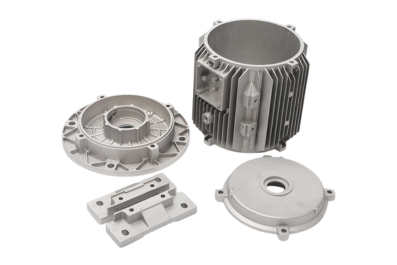
The Working Principle of Annealing in Industrial Metals
The essence of annealing is to alter the microstructure of the metal through a process of “heating + holding + slow cooling,” thereby reducing hardness and eliminating residual stresses.
In industrial production, after metals undergo cold working (such as cold rolling or cold drawing), casting, or welding, their internal structure becomes disordered and tense. Just as a person becomes fatigued from prolonged physical tension, metals also become hard and brittle, developing internal stresses. This makes them prone to cracking and deformation during subsequent processing, significantly increasing the scrap rate. Annealing is the “key step” to resolving these issues.
From a microscopic perspective, the annealing process is primarily divided into three stages. There’s no need to memorize complex academic definitions; it can be likened to “the relaxation and reorganization of the metal’s internal structure”:
T he first stage is relaxation. Just as a person slowly relaxes their body, when metal is heated, internal stresses are gradually eliminated, and the tense structure begins to ease. This stage primarily reduces internal stresses to prevent subsequent deformation;
The second stage is recrystallization. As the temperature rises and the holding time increases, the disordered internal structure of the metal rearranges itself, forming new, uniform, fine grains. This stage effectively softens the metal, addressing the issue of hardening that occurs after metal processing;
The third stage is grain growth, during which the newly formed fine grains gradually grow larger, becoming more uniform and stable. This enhances the metal’s performance stability and facilitates smoother subsequent processing.
The fundamental principle of annealing lies in carefully controlling three core elements: heating temperature, holding time, and cooling rate. This allows the metal’s internal structure to undergo a process of “relaxation → reorganization → stabilization,” thereby achieving the desired effects of softening, stress relief, and quality stabilization, and preparing the metal for subsequent processing.

Key Advantages of Industrial Metal Annealing
The reason industrial metal annealing has become an indispensable step in metal processing lies in its ability to resolve numerous issues arising after metal processing and deliver tangible benefits. Each advantage aligns with the realities of industrial production and can be summarized in three points.
Reducing Hardness for Easier Machining
Many metals become extremely hard after cold working or casting, making them very difficult to machine. This not only wears down cutting tools but also reduces machining efficiency.
After annealing, however, the metal becomes softer, allowing for smoother machining. This effectively reduces tool wear, improves processing efficiency, and enhances the surface quality of the workpiece.
For example, cold-drawn steel wire has very high hardness before annealing and is difficult to bend. After annealing, it can be easily bent and shaped to meet subsequent processing requirements.
Eliminating Internal Stresses to Prevent Deformation and Cracking
During machining, welding, or casting, invisible internal stresses form within the metal. These stresses act like a taut rope; during long-term storage or subsequent processing, they can easily cause warping, deformation, or even cracking, resulting in scrap.
Uniform Microstructure
During metal casting or forging, the extremely rapid cooling rate prevents alloying elements from distributing uniformly, leading to segregation. Annealing involves heating the metal to a temperature slightly below its melting point, causing the atoms to transition from a stationary state to rapid movement.
The metal is then held at this high temperature for 10 to 15 hours, allowing the alloying elements to diffuse continuously. This ultimately achieves compositional homogenization, which is what we refer to as a uniform microstructure.

Comparative Analysis of the “Four Fires”
Annealing, normalizing, quenching, and tempering—these “four heat treatments” are the four fundamental steps in the heat treatment process. After forging, materials generally require annealing and normalizing first to lay the groundwork for subsequent heat treatments.After rough machining, quenching and tempering are performed to ensure the material’s properties meet requirements before proceeding to finish machining. So, what are the differences between these “four heat treatments”? Beginners, take note.
Annealing
First, what is annealing? Annealing is a heat treatment process. Simply put, it involves heating a metal to a specific temperature and then allowing it to cool slowly.
Beginners can think of annealing as a process that softens and toughens the material, removes internal stresses, and makes the grain structure more uniform.
This is similar to exposing freshly kneaded dough directly to the air, allowing it to rest slowly so that it can fully relax. The kneading process is analogous to the heating phase of metal annealing, while letting the dough rest in the air is analogous to the cooling phase of the heated metal.
There are many benefits to annealing, such as facilitating machining, eliminating distortion, and reducing hardness. For more details, please refer to Part 3 of this article.
Normalizing
So, what exactly is normalizing? In simple terms, normalizing involves heating the metal to a critical temperature, then removing it and allowing it to cool naturally in the air.
Generally, normalizing occurs slightly faster than annealing, resulting in a slight increase in the strength and hardness of the metal workpiece. Similar to the annealing process, it serves as a preparatory heat treatment step and plays a crucial role.
Quenching
Quenching is also a very important step in the heat treatment process. It involves heating the metal to a temperature above the critical point, holding it there for a period of time, and then immediately immersing the metal workpiece in water or oil to cool it rapidly.
This process significantly increases the material’s hardness, making it more brittle and extremely strong, though it also generates substantial internal stress . In layman’s terms, it “freezes” the material instantly, effectively preparing it for the subsequent tempering process.
Tempering
The final step in the heat treatment process is tempering, which involves reheating the quenched workpiece and then cooling it. The primary purpose of tempering is to reduce brittleness, as the preceding quenching process causes the workpiece to “freeze hard” instantly, making it extremely brittle. Tempering effectively addresses this issue by releasing stress, restoring toughness, and slightly reducing hardness.
Virtually all quenched workpieces must undergo tempering; otherwise, they will crack upon impact, resulting in material waste.

Summary
In summary, annealing of industrial metals is a heat treatment process that involves heating the metal. It is crucial for industrial metal processing and offers numerous benefits.
However, for beginners, as long as you understand the principles, types, and benefits of annealing and can distinguish the “four types of heat treatment,” you can easily master annealing. So what are you waiting for? Read on carefully.
FAQ
What are the common types of metal annealing?
Depending on the specific process objectives, annealing is primarily categorized into the following types: full annealing, diffusion annealing, spheroidizing annealing, stress-relief annealing, and recrystallization annealing.
Why is annealing necessary after metal processing?
This is because during processes such as welding, cold stamping, and cold rolling, metals develop severe internal stresses and work hardening, which can easily lead to deformation and cracking of the workpiece. Annealing is performed to maintain the metal in good condition, ensuring quality and safety in use.
How does annealing improve a metal’s ductility and machinability and relieve internal stresses?
Improving ductility: By heating the metal, recrystallization occurs, which eliminates dislocations and restores the material’s capacity for plastic deformation.
Improving machinability: The process transforms excessively hard microstructures into softer ones, reducing hardness and minimizing tool wear.
Relieving Internal Stresses: At high temperatures, atomic diffusion and the release of microscopic elastic distortions balance internal stresses.
What are the steps in the metal annealing process?
Beginners only need to remember three steps: heating—holding—cooling.
Step 1: Heating: Raise the temperature at an appropriate rate until the desired temperature is reached.
Step 2: Holding: Maintain the same temperature for a specific period until the microstructure is uniform.
Step 3: Cooling: This is the most critical step in the annealing process. Typically, the metal is cooled very slowly within the furnace to below 500°C, followed by air cooling outside the furnace.
What are the most common mistakes beginners make when annealing metal?
Cooling too quickly is one of the most common mistakes made by beginners. This can prevent the hardness from decreasing or create new thermal stresses. Additionally, inaccurate heating temperatures are also common among beginners. If the temperature is too high, it will cause grain coarsening—commonly known as overheating—but the temperature must not be too low either, otherwise the desired microstructural transformation will not be achieved.